Category: Law Practice Management

Diversity & Inclusion: The Foundation of a Profession That Reflects the People We Serve

By Renée Stackhouse

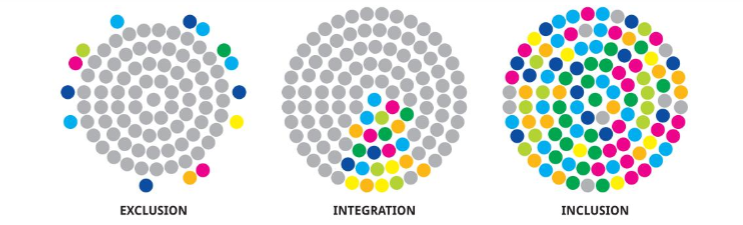
The best explanation that I’ve seen about the definition and interrelationship between diversity and inclusion is this1:

Diversity is the who and the what; who’s sitting around that table, who’s been recruited, who’s being promoted and who we’re tracking from the traditional characteristics and identities of gender and ethnicity, sexual orientation and disability — inherent diversity characteristics that we’re born with.

Inclusion is the how; inclusion is the behaviors that welcome and embrace diversity. It is the active, intentional and ongoing engagement with diversity.

Jane Silber quipped, “The difference between diversity and inclusion is being invited to a house and being able to rearrange the furniture.” Verna Myers similarly said, “Diversity is being invited to the party. Inclusion is being asked to dance.”

The important distinction is that ability to effect change, to create movement, and to participate meaningfully requires inclusion.
This is a relatively new concept and it seems to be generational in nature. The boomer and Gen-X viewpoint has been categorized as that diversity was a representation of fairness and protection to all and that it was the “right thing to do” regardless of whether it benefited the business. But the focus still remained on fitting in once you were brought into the fold.2 Millennials, on the other hand (who in 10 years will comprise nearly 75 percent of the workforce), want acceptance for who they are and feel it is unnecessary to downplay their differences in order to get ahead.

Companies can expect to see tangible results (either way) depending on their diversity and inclusion policies and implementation. According to a Deloitte and Billie Jean King Leadership Initiative Study3, 83 percent of millennials are actively engaged when they believe their organization fosters an inclusive culture, compared to only 60 percent when their organization does not foster that type of culture. A recent Gallup study has cited that the cost of disengaged employees adds up to $483-$605 billion per year in lost productivity.4

Not only is inclusion important for engagement and has an effect on the corporate bottom line, but it’s vital to sustaining diversity in the legal profession.

Let’s take women in the law, for example. According to studies, women are about 56 percent of the enrolling first-year law students, and women have comprised 40 to 51 percent of the law school graduates in California for the last 20 years (growing to over 50 percent in the last few years). And yet, only about 36 to 40.6 percent of the lawyers in the state are women. Women are leaving the profession. This is especially true for women of color. More than 75 percent of women of color leave their (private) law firm within five years and 85 percent of women of color leave private law within seven years.5

Building pipelines for diversity has become a catchphrase and a box to check, but it’s not enough. Think of it this way: The diversity pipeline is the roller coaster heading up to the highest peak but if we don’t incorporate the inclusion aspect then the tracks end and the roller coaster plummets to the ground. We’re setting ourselves up for failure if we don’t utilize, accept and appreciate the diversity that is brought to the table.
Read More

Pitch Tips: How to successfully pitch your stories to the press

By Karen Korr and Lyle Moran

Nowadays, social media gives you myriad ways to connect to the press and find reporters who may be interested in your story, your client, or even your law firm partner who has a story that should be in the spotlight. However, public relations professionals and reporters alike will tell you that there are right and wrong ways to get your story seen.  At a recent lunch and learn session at the Bar Center, legal reporter Lyle Moran (formerly with the Los Angeles Daily Journal) and SDCBA Director of Communications and Outreach Strategy Karen Korr shared their top tips for successfully pitching your stories to the press. Read More

Hiring Trends: What Firms Need to Know

By Henry Angelino

2018 is coming to a close and many firm leaders are thinking about their plans and goals for 2019. One typical consideration is whether to expand their firm by hiring additional staff and/or attorneys. Do they need an assistant or an associate just to keep up with their case load, and can the budget support another salary? If this is their first employee, they have the added concern of ensuring the structure and procedures are in place to properly manage and efficiently/effectively utilize an employee. Thus, careful planning and research should be part of this major decision, and hiring a new employee should not be taken lightly or done in haste.

So, you think you are ready to move forward and expand your team but aren’t sure of the best path to take in finding a quality candidate. The first step is to make sure you have a complete description of the knowledge/experience requirements, duties and responsibilities for the position, and know the traits you are looking for in your ideal candidate. Additionally, what are your expectations if the position is for a billing professional? Are you looking for a more experienced employee or do you want a less experienced employee that you can train without having to worry about “bad habits” or “knowledge gaps” from previous employers? Do you want to conduct the search or hire a recruiter to do the initial search and screening for you? OK, you have done your homework and are ready to initiate a search. What do you need to know about the current legal hiring market to increase your chance of success? Here are a few trends that I am seeing in San Diego.

-There is an increasing number of smaller and mid-sized firms that are growing and looking for qualified candidates to fill attorney and staff positions. Some of the fastest growing firms are groups of attorneys that have left larger firms to create their own firm and culture.

-There are fewer associate attorneys available due to lower numbers of law students in recent years and it is harder to find associates with three to five years of substantial law firm experience, a typically desired attribute. On the positive side, there is an increasing number of diverse candidates applying for positions.

-Qualified candidates with a solid performance record are in high demand and will usually be exploring multiple opportunities simultaneously. Thus, employers must be ready to move quickly to evaluate quality candidates and make a hiring decision.

-Small to mid-sized law firms are using contract attorneys or part-time support staff personnel to assist with excess legal and administrative tasks. This allows the firm to “test drive” employees before making a permanent hire while remaining within their budget. Another trend is to outsource various human resource and administrative tasks to reduce the time spent to manage the firm and remain compliant with the changing laws and regulations.

-Support staff are more highly qualified and willing to perform multiple roles within small and mid-sized law firms. Many candidates have a paralegal certificate and thus can generate revenue to help offset their salary and benefit costs. Additionally, some more experienced support staff candidates are applying for traditionally entry-level positions and bringing their considerable breadth of skills and experience to smaller firms. Alternately, you will receive a very large number of applications for entry-level positions and will need to separate qualified from unqualified candidates, which can be time-consuming.

-Turnover rates are increasing, causing firm leadership to spend more time hiring and training new employees after a dismissal or departure. Some of the reasons I have seen for this trend is a disparity in values or priorities, employees not meeting stated expectations, and employees not investing the time and effort to build sound legal skills and produce quality work.

Adding new members or service providers to a small or mid-sized law firm team can improve employee and client care, increase productivity, and reduce the time required by leadership to manage the firm while freeing up partners for strategic initiatives, business development and training/mentoring employees. To be successful though, firm management must ensure they carefully and quickly screen qualified candidates to ensure the right cultural and capability fit. Not always an easy task given the current hiring environment!

Henry Angelino is the owner of Angelino & Associates, Inc. and a strategic business and operations consultant for law firms. Read More

You Can’t Spell Diversity Without D.E.I.: The Importance of Equity and Inclusion in Diversity

By Hali Anderson

As someone who has served on various diversity committees, I know firsthand that recruiting diverse students or employees is one thing, but retaining and ensuring that these diverse individuals maximize their potential is a whole different ballgame altogether. In a past issue, I briefly covered the Google lawsuit and the now infamous Google memo written by James Damore. In that memo, Damore shared his ideas on how diversity is harmful to Google as well as the diverse candidates who were being forced into job positions with which, he believed, they were biologically incompatible. Damore’s employment with Google was terminated as a result of this memo. In his subsequent lawsuit, Damore alleged that he felt that he was unlawfully discriminated against for his status as a white male and his conservative viewpoints. The lawsuit and the memo illustrated an interesting dichotomy that we are also seeing play out in our day-to-day lives. As the world becomes more diverse, how does one make sure that everyone still feels included?

How does a school or employer ensure that those who were once or are still in the majority still feel valued and included when the workforce, as they know it, is changing? Conversely, how does a school or employer ensure that those who are changing the workforce feel valued and included?

Now, to be sure, this is nothing new. I’ve listened to my parents and other black Americans talk about their experiences of being bussed in to white schools and the negative impact it had on their psyche and self-esteem. One can imagine how it must have felt to be brought into a new school full of “others” who make you feel unwelcome, yet you are supposed to be thankful for this opportunity that has been thrust upon you. These are natural feelings that any human, let alone a child, would have. If you can put yourself in the shoes of those brave, but scared children, you can see how increasing diversity is not the end of the story. It is the beginning.

Another example — I consider myself to be a proud Xennial. For those of you who don’t know what that is, it’s the generation of people between Generation X and the millennials. As described in an article on Romper.com:

We see ourselves reflected in descriptions of kids who played Oregon Trail, adolescents who used dial-up to chat on AOL instant messenger, and college students using mobile phones for the first time. Our pre-internet childhood separates us from millennials, and it’s obvious now that we’re parents.

Personally, I think that being an Xennial is the best of both worlds because I feel I can relate to and understand both Gen X-ers and millennials. The same is not often true for my two counterparts. Gen X-ers often feel resentful toward the new generation of millennials while millennials may feel unfairly criticized by Gen X-ers. Both Gen X-ers and millennials tend to feel misunderstood by one another. Again, these are emotions with which most people can identify.
While these two examples are vastly different, they both highlight the issue of what happens when there is diversity without inclusion. What is the difference between these two concepts? And how does equity come into play?

Independentsector.org aptly states:

Diversity includes all the ways in which people differ, encompassing the different characteristics that make one individual or group different from another. While diversity is often used in reference to race, ethnicity and gender, it also includes age, national origin, religion, disability, sexual orientation, socioeconomic status, education, marital status, language and physical appearance. It also includes diversity of thought: ideas, perspectives and values. We also recognize that individuals affiliate with multiple identities.

Inclusion is the act of creating environments in which any individual or group can be and feel welcomed, respected, supported and valued to fully participate. An inclusive and welcoming climate embraces differences and offers respect in words and actions for all people. It’s important to note that while an inclusive group is by definition diverse, a diverse group isn’t always inclusive.

Equity is the fair treatment, access, opportunity and advancement for all people, while at the same time striving to identify and eliminate barriers that have prevented the full participation of some groups. Improving equity involves increasing justice and fairness within the procedures and processes of institutions or systems, as well as in their distribution of resources. Tackling equity issues requires an understanding of the root causes of outcome disparities within our society.

Or as Dwayne Crenshaw, CEO of RISE San Diego and RISE@Work (quoting Verna Myers), simply puts it, “Diversity is being invited to the party. Inclusion is being asked to dance.” RISE@Work is a local company that offers customized, interactive Diversity, Equity & Inclusion (DEI) Leadership Training and consulting to employers and other organizations to help them make sure their workforce can adapt to the world’s increasingly diverse population. To deliver this training, RISE@Work uses Rise Fellows who are diverse leaders in the San Diego community. The trainers are individuals who have experienced lack of equity and inclusion themselves.

JONES, a leadership development, diversity and organizational change consulting firm, is another local company offering such training. Dr. Steven Jones and his team of consultants offer trainings to both education-sector and corporate audiences focusing on the importance of inclusion in maintaining a healthy and thriving environment for students and employees. Dr. Jones explains, “It is important that we train our leaders in companies to be inclusive leaders and to have the skills that allow them to leverage diversity of thought, diversity of talent and diversity of background. This work is a skillset as opposed to a value system. What DEI Training recognizes is that, as a leader, I can have the best of intentions, but if I don’t have the skills to minimize the impact of conscious and unconscious bias, then with the best of intentions, I may fall victim to the “similar to me bias,” which is the desire to work with people that are like myself. My go-to person will be someone that is more similar to me than different. I won’t do that out of prejudice, but instead out of the intention of managing time and risk. When selecting to work with someone who looks just like me, I can use less words with them. I can be more efficient with my time. I am not thinking about diversity — I am thinking of time-management. From a risk management perspective — when I view someone as more similar to me, handing them a job or promotion is less of a risk, because I think, if “I’m smart, they’re smart.” This “similar to me bias” ends up perpetuating a workplace where people do not feel included and, in reality, do not end up having the same opportunities as others.

The reality is that diversity without inclusion is really a recipe for disaster. And I say this as someone who has counseled both employers and employees on these issues, and experienced them myself. What good does it do to recruit diverse talent if the talent does not feel welcomed when they arrive? And finally, what good is feeling welcomed if, in reality, you do not actually have the same opportunity for success? As stated by Meg Bolger, Social Justice Facilitator and Founder of Same Team, “Equity is not an outcome. Equity refers to the process a company consistently engages in to ensure that people with marginalized identities have the opportunity to grow, contribute and develop  —  regardless of their identity.”

These are the exact issues that DEI Training is meant to address. Andrew Picard, Vice President of Operations at San Diego Workforce Partnership, took the laboring oar of running the procurement process for DEI Training at SDWP. Picard explained, “We decided to pursue DEI work not only because it’s the right thing to do, it’s the smart thing to do. Creating a working environment where all people feel empowered to contribute as their full self makes us more effective in executing our mission in the community.” Picard went on to say, “DEI Training has been a valuable and enriching experience. What DEI work teaches us is that it is not any single experience, but a journey with a variety of growth opportunities and tensions along the path. We strive to integrate DEI as a philosophy in which we approach our business, both internally in developing our colleagues and externally in how we serve the region.”

Dr. Jones cautions, “DEI Training alone is not a strategy. Companies must engage in a culture change that supports leaders and the skills they learn during training. Leaders need to be able to apply those skills. Application of these skills requires a culture of accountability and a larger, strategic culture change initiative so managers can develop the necessary skillset for inclusive leadership. It’s an ongoing process.”

With San Diego’s population becoming more diverse every year, it is imperative that schools and employers are prepared to embrace this growth, not to just deal with it. So, San Diego, let’s take the bull by the horns, seize the day and lean on in. The time is here to move from diversity to diversity, equity and inclusion. The success of San Diego depends on it.

Hali Anderson is an attorney with GrahamHollis APC.

This article was originally published in the Sep/Oct 2018 issue of 

San Diego Lawyer Read More

Working and Communicating with Clients with Mental Health Issues

By Dr. Alan Abrams, MD, JD and Aleida K. Wahn, JD

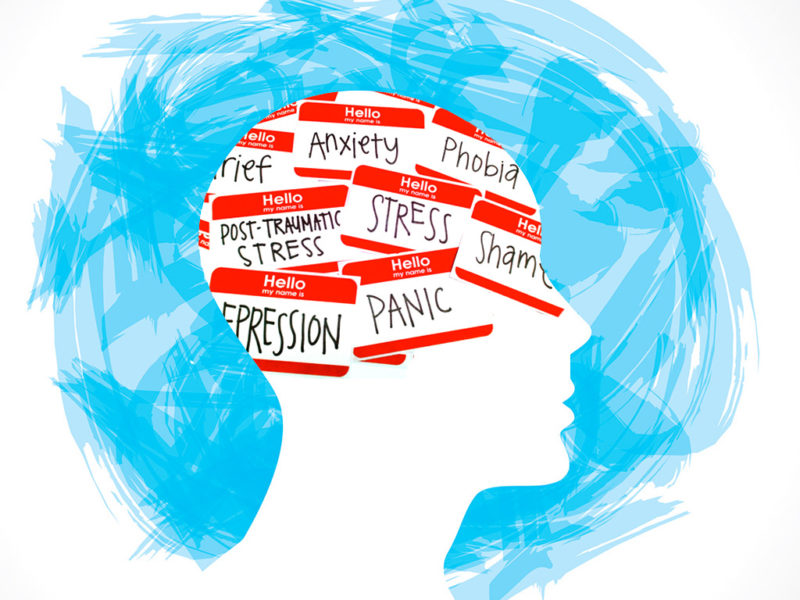
Mental illness, even severe mental illness is diverse. Otherwise sophisticated Supreme Court opinions have regularly promulgated a very one-dimensional view of mental illness — you have it or you don’t. Finally, in 2008, Justice Beyer astutely noted in Indiana v. Edwards: “Mental illness itself is not a unitary concept. It varies in degree. It can vary over time. It interferes with an individual’s functioning at different times in different ways.” The attorney’s ability to assess the severity of their client’s impairment is the most essential part of working with clients with mental health issues, along with rating the three issues of boundaries, trust and realistic communication.

Many forms of severe mental illness are characterized by denial and the construction of facades and personas to hide the realities. Something I have always found very helpful is to ask my patients to write a detailed autobiography for me. Writing taps into different brain storage than speech, so there is always new material and real data to work with. Make sure your client labels it as attorney client communication, especially if they are incarcerated. You need to know how accurate, distorted or dishonest your client’s narrative accounts may be. You want to anticipate how much extra effort you will have to put in to create some level of trust, whether that will even be possible, and how to create appropriate boundaries.

Improving communication with clients with mental illness greatly depends on the severity of the distortions of reality, and the degree to which your client has had communications that were not mainly centered on life’s basics for survival. Clients with less disabling mental illness often make inaccurate assumptions about the nature of their relationships. You can address those assumptions early on to set the boundaries and establish the tone for your work with them. It never hurts to be plain spoken, e.g., “I’ve rarely seen a client benefit from taking on the role of the victim. Try thinking about being lucky enough to have survived. In my experience that is a better way to live.” Talking about the obvious current stress the client is under can allow some pushing for better boundaries, honesty and openness by attributing the negatives to current stress. With more severe distortions and denial, talking about getting support from a professional may be the road to better communications. Competency questions arise with clients who can’t establish boundaries, who confuse trust with exploitation, or who cannot engage in basic communication.

Rather than trying to memorize the Diagnostic and Statistical Manual (DSM), some intuitive introspection and evaluation of data will go a long way in determining which clients have significant mental illness. With some clients, the realities are too obvious — incoherent speech about the secret agents, or the microchips, or their fifth DUI. But so many other forms of mental illness and emotional suffering are more subtle. Once you have the information underlying the legal action, the autobiography, your client’s early behavior with you, and your gut instincts, there is plenty of data to make a good assessment of whether there will be a predominance of honest, accurate communication, respect for boundaries, and mutual trust and respect.

You can then begin to set your agenda for which “red flags” you will try to deal with yourself and when the “red flags” will give you a sense that things will not resolve and that a mental health professional may be needed. It doesn’t have to involve an assessment of the client. A talk with a friend in mental health about what you experience with the client can help. Often the advice though is “let me take a look.” Preparation of your client will then be needed to make the process less threatening and intrusive. Every reason can be expressed as a measure of your concern. So even the client who calls 10 times a day to berate you for being lazy, is more likely to be less rejecting when you tell him that you have asked for a meeting with a mental health clinician, “because I am concerned that you are having such a difficult time trusting me. Maybe the doctor can give both of us suggestions how to do better.”

The specifics of all the varieties of mental disorders intersecting with all the varieties of legal cases can be overwhelming, but you are not responsible for either a diagnosis or cure. Fortunately, the bottom line isn’t that complex:

1. How do you rate the three basics with this client — boundaries, trust and realistic communications (i.e., not denial and delusion)?

2.Don’t ignore all the red flags.

3.Understand that mental illness is rarely under a person’s ability to change by individual will power or “making better choices.”

Overall, understanding that regardless of how the lawsuit is resolved, the client has a real need for effective treatment to have any chance at a better future.

Dr. Alan Abrams is an MD and JD. He has a private psychiatry practice and is a retained and court-appointed expert in criminal and civil matters.

Aleida K. Wahn is an attorney and award-winning true crime writer. You may contact her through her website at www.aleidalaw.com

This article was originally published in the Sep/Oct 2018 issue of 

San Diego Lawyer Read More