2018 Law + Technology Summit Wrap Up
By Mike Finstad
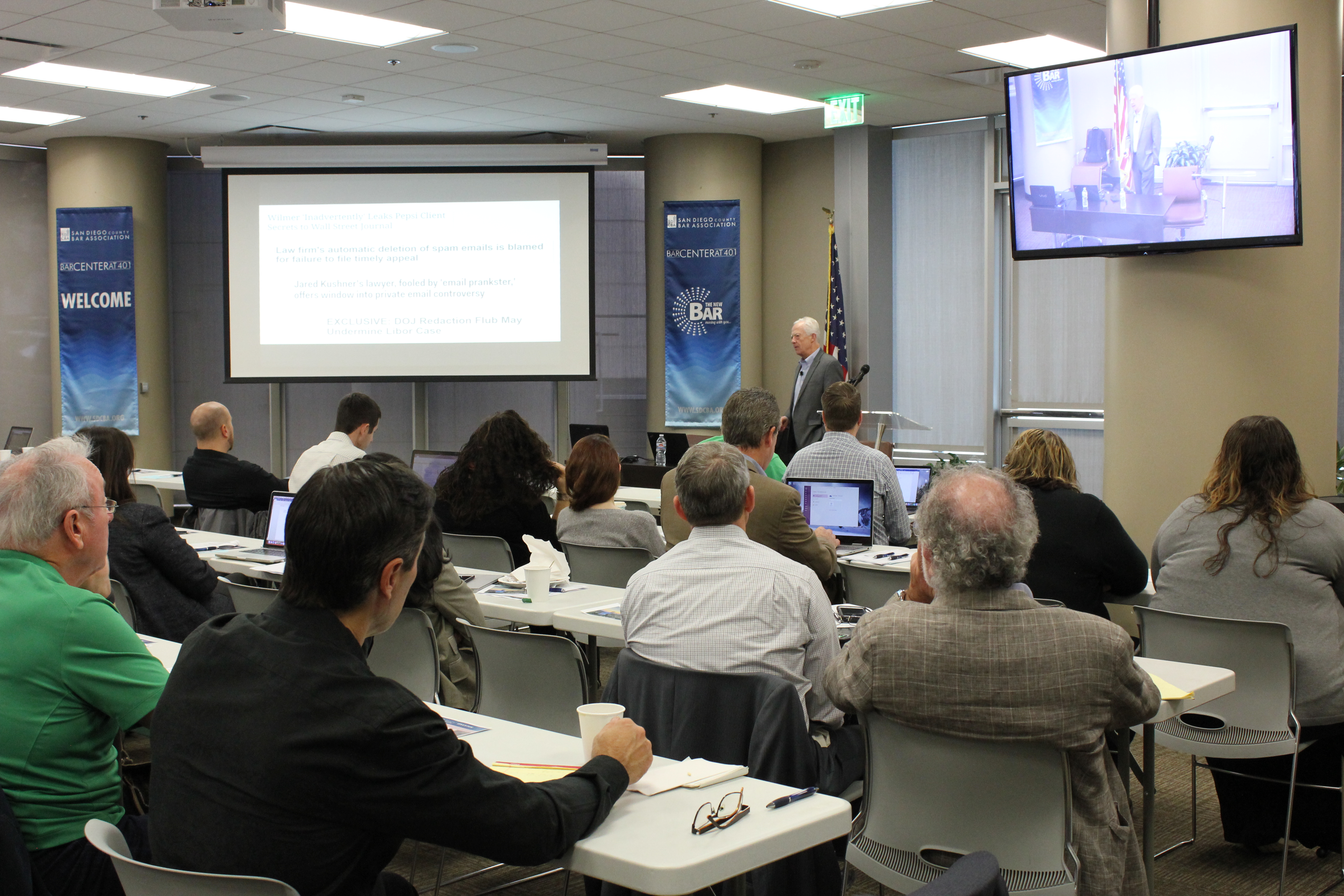
If you didn’t get a chance to attend the SDCBA’s 2018 Law + Technology Summit presented with California Lawyers Association last month, here’s a summary of the highlights.


By Mike Finstad
If you didn’t get a chance to attend the SDCBA’s 2018 Law + Technology Summit presented with California Lawyers Association last month, here’s a summary of the highlights. Read More

By Jeremy Evans
We live in an age where your first reaction when posed with a question that you do not know the answer to is to “Google it.” We use our phones, tablets and computers to use applications, search for and view information, and connect on social media, not to mention the communication resources of texting, calling and emailing. In our world, it is more likely that you will watch a live sports event on Twitter or Facebook than on your television, and that your first view/meeting of a person or their website is through a social or professional media application like Instagram or LinkedIn or via Google Chrome and Safari. Read More

Do you have a website? Here are a few basic considerations for lawyers who don’t.
Getting Started Read More

It is completely amazing to look back to the days when I was a child to now and see how revolutionary our society has become due to technological developments and advances. When I was in middle school and high school, cell phones were not commonplace. Even by senior year, probably less than half of my classmates had them.
Nowadays, children in elementary school and middle school have cell phones and are far more skilled on them than I am. Just think how much things have changed during the course of experienced lawyers’ careers, when law was practiced out of reports instead of Westlaw!
Technology is amazing, and as attorneys we rely on it to perform our jobs successfully. As a personal injury attorney, I have witnessed how technology altered the legal profession.
While the recent rise of rideshare applications have altered the way we travel, this new technology has directly impacted issues in personal injury litigation as well. Although now we cannot imagine a world without it, Uber began around 2009. Uber and Lyft, along with other companies, infiltrated every major city in the world. It is unbelievable if you look around downtown and see how many cars have the Uber or Lyft symbol on the windshield. While Uber and Lyft offer more choices for consumers and limit those who would drive after drinking, they have brought an interesting new dimension to personal injury law and the new technology has led to new legal issues.
If an Uber or Lyft driver is involved in an accident, questions arise regarding insurance policies. Whose insurance pays for the injuries? Do you have to go after the insurance of the individual first and then the Uber and/or Lyft policy? Uber and Lyft usually carry a pretty large policy which tends to cover the drivers of the cars, but if you are in a ride share and end up in a collision, then there could be multiple people going after the Uber or Lyft policy depending which party was at fault. The insurance issues are just the tip of the iceberg of how personal injury law is having to adapt to new technology.
Yet a bigger game changer is on the horizon: driverless cars. Although currently being tested, they may be on the market in the near future. With Google unveiling the first self-driving car and companies like Chrysler and Ford following, it is only obvious to question how these cars will affect personal injury lawsuits.
If there is a collision with a driverless car or self-driving car, who is to be held responsible? Will insurance cover these collisions? If there is no resource or remedy similar to that of a personal injury lawsuit, then would the injured person be able to go after the manufacturer of the vehicle? Would the individual have to prove that the car malfunctioned or that there is some sort of product liability claim in order to have a chance at successfully suing the manufacturer?
In a recent article, Steven Seidenberg examined the issue of liability when self-driving cars crash. He pointed out that not only is there a question of who is really responsible, there could be a sharing of the blame and multiple defendants involved. He also explained that technical forensic investigations will be required. Personal injury attorneys will need to hire experts and spend far more money and time than they would during a traditional collision in order to determine the cause of the accident. It will add additional expenses to litigation and turn simple negligence suits into complex, lengthy product liability litigation with multiple defendants and experts. It will be up to lawyers to work out these issues and stay on top of the changes driven by technology.
It is hoped that self-driving cars will reduce the amount of distraction-related accidents and make the roads safer. Distracted driving is dangerous, claiming 3,477 lives in 2015 alone (
according to NHTSA Read More
By Jeff Bennion
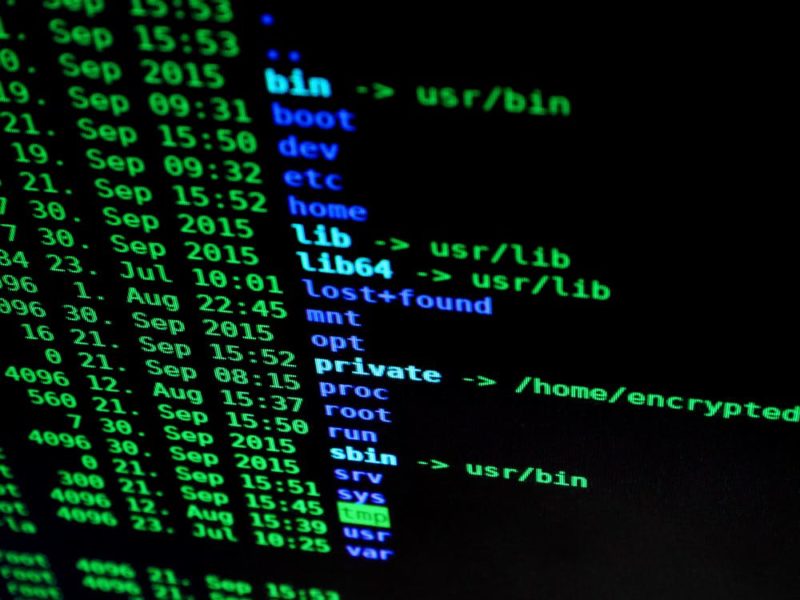
For most of us, troubleshooting cybersecurity is difficult because we usually can’t see the problem and only find out about it after there’s been some catastrophic loss. Even if you are a cybersecurity novice, there are some simple things you can do and look out for to make sure your confidential client files are safer.
Consider Moving to the Cloud Read More

8 Tidbits of Advice from an International Student Turned U.S. Lawyer
February 15, 2024
Tips from the Bench: Hon. Jill L. Burkhardt
February 15, 2024
February 15, 2024

Application of CRPC 1.15 to Government Lawyers
February 20, 2024
January 19, 2024