Big Data Analytics to Automate Patent Disclosure of Artificial Intelligence’s Inventions
By Omid Valinasab Ford, Walker, Haggerty & Behar LLP
The exponential growth of artificial intelligence (AI) will change the future of humanity.[1] As Stephen Hawking once suggested, the short-term impact of AI depends on who controls it; the long-term impact depends on whether it can be controlled at all.[2]Read More
The Corporate Transparency Act Means Rigorous Reporting Requirements for Corporate Clients
By Kalli Sarkin White and Bright, LLP
The Corporate Transparency Act (CTA) is a new law that imposes additional reporting requirements on qualifying entities. Despite its name, the CTA will affect more than just corporations – it will also have an impact on limited liability companies and similar entities,[1] such as business trusts and limited liability partnerships.Read More
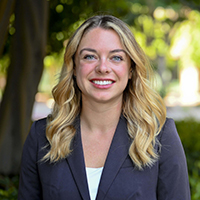
Hana Willard is a judicial law clerk for Magistrate Judge Allison H. Goddard and could not love her work more. Before graduating from the California Western School of Law in 2019, she took an unconventional path to the bar after graduating from the University of Michigan as a Political Science major in 2009. Though she found something to love about every job she has held – including being a bartender and wine educator – Hana enjoys working in Judge Goddard’s chambers the most. “To make me leave, you’d have to drag me out kicking and screaming,” she says.Read More
July brought the sun to San Diego and the New Lawyer Division was ready to welcome it. The NLD co-hosted the annual Summer Social, a San Diego County Bar Association signature event. On July 12, attorneys across San Diego gathered at the Waterfront Park in downtown to enjoy “Una Notte d’Estate” or “One Summer Night.” The event was Italian-themed, and the food, drink, décor, and games charmingly evoked the Mediterranean. The NLD had a booth at the Summer Social, answered questions about membership and activities, and gave herb plantings as party favors.Read More
Tips For New Lawyers: Requests for Production of Documents, Tangible Things, Land, and Other Property
By Katherine Dishongh, Esq.
In civil cases, parties can use Requests for Production of Documents (RFP) to obtain documents. There is no limit on the number of RFPs. Keep your RFPs in mind when drafting other discovery devices to avoid wasting limited Special Interrogatories or Requests for Admission.Read More